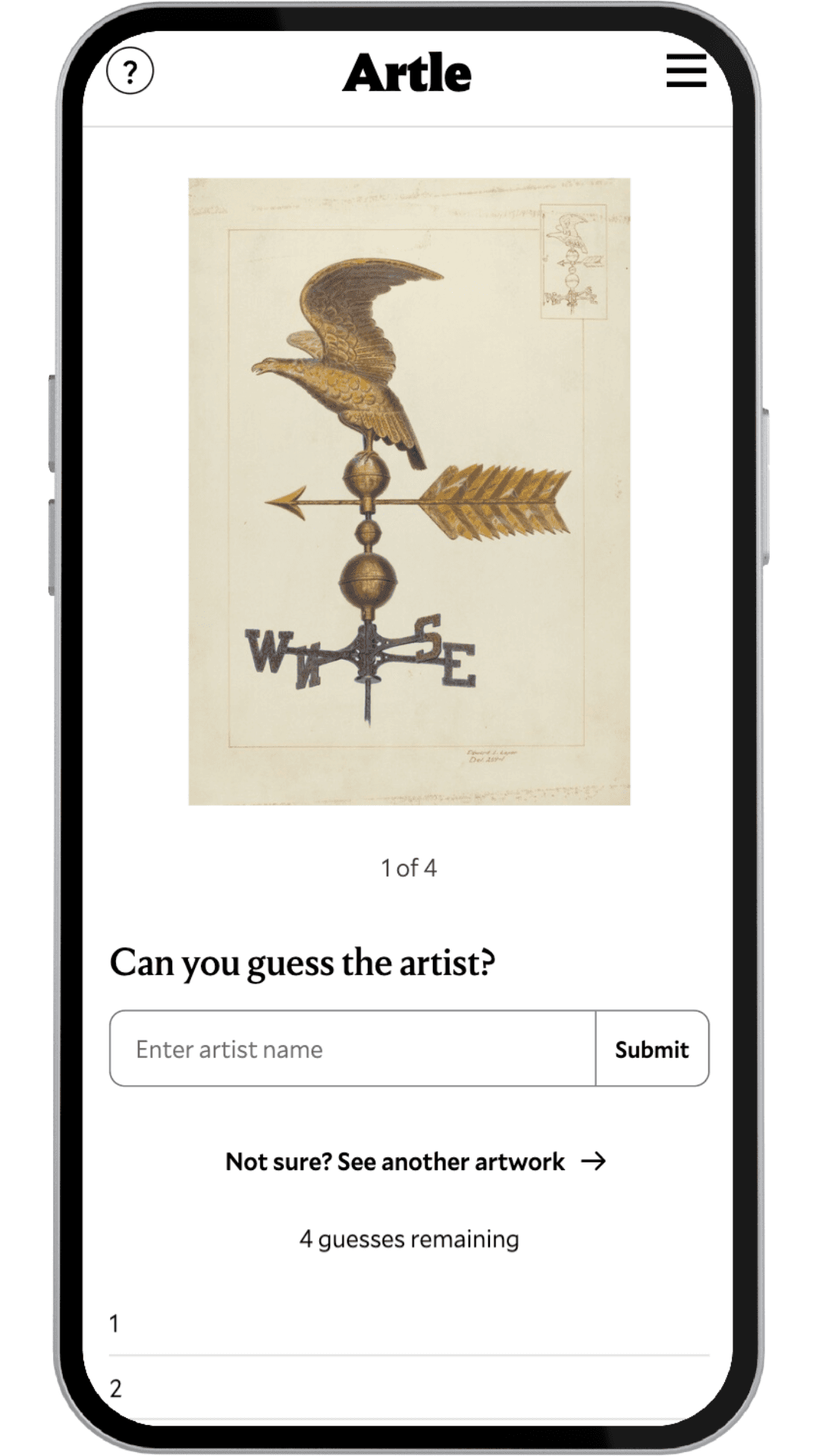
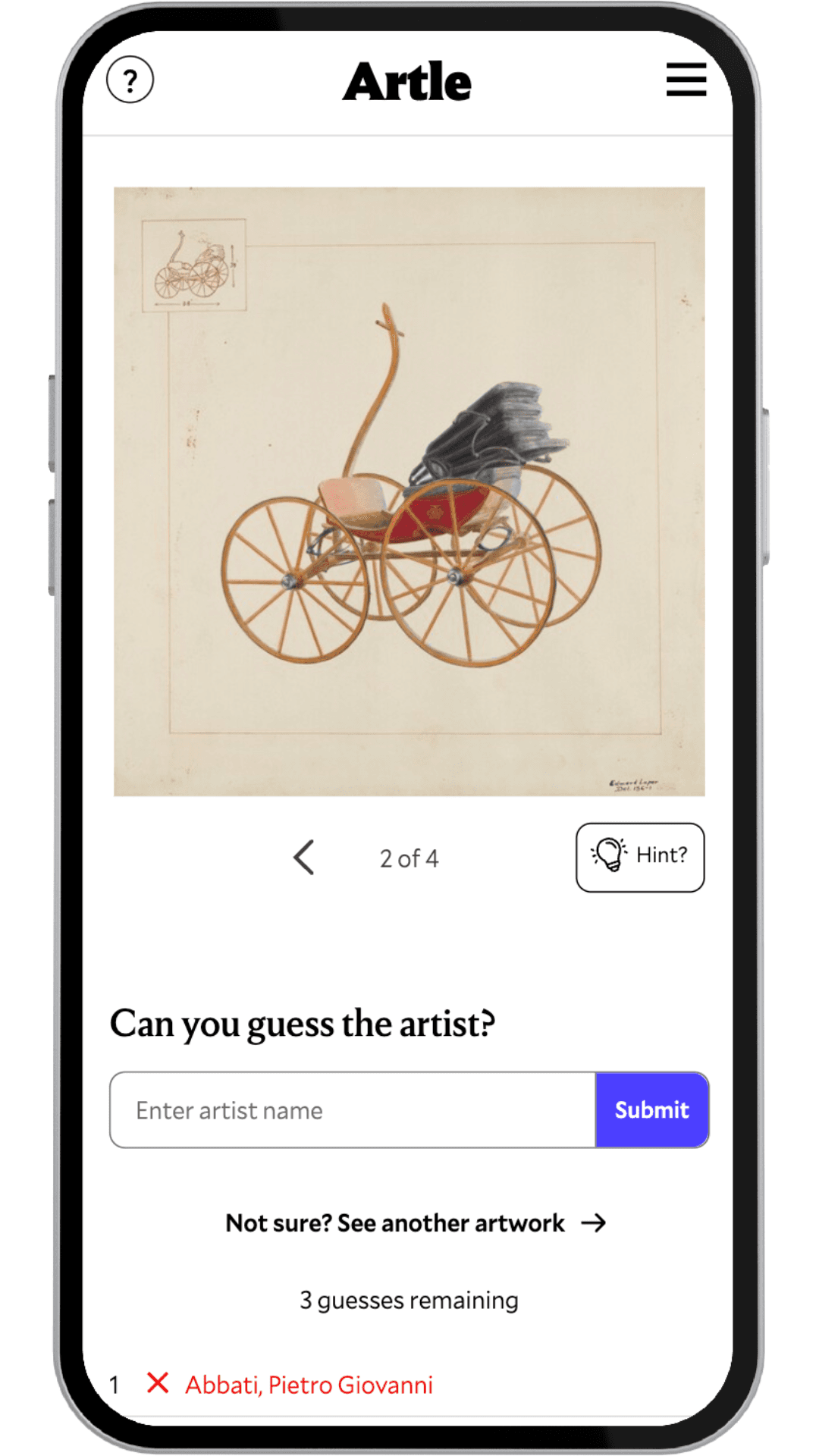
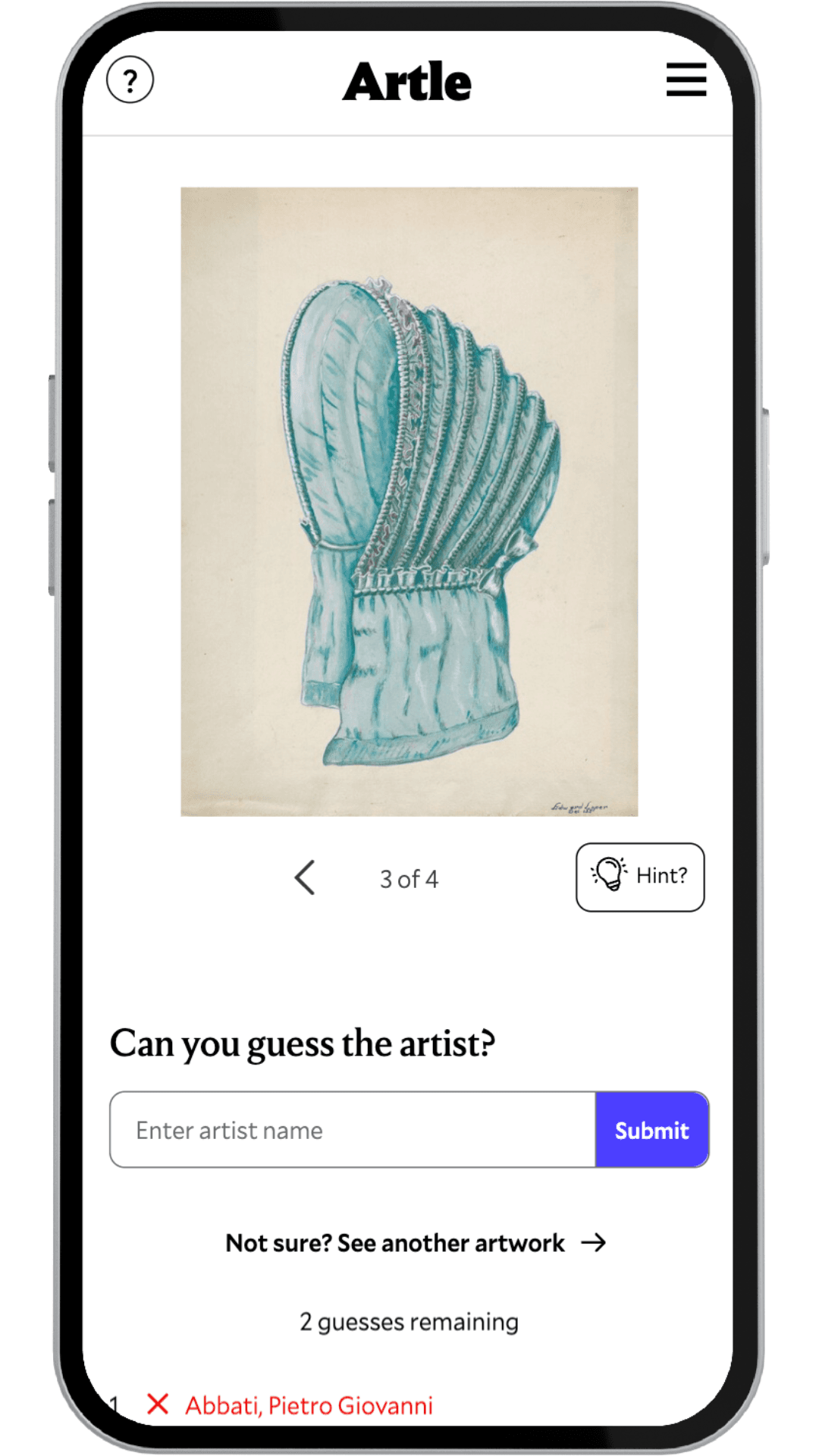
Client
National Gallery of Art
Collaborators
Product Designer and Developer
Problem
How might we improve Artle for fun seeking users so they keep engaging with the games?
Skills Applied
Usability Testing, Interviewing, Thematic Coding, Moderating, Affinity Mapping, Mockups
Timeline
6 weeks (April 2024 - May 2024)
Impact
Recommendations produced a cleaner, more delightful experience designed to drive return engagement and reduce drop-off.
Scope
Evaluating usability for Artle game and their archive of previous games
Identifying pain points
Assessing game replayability
Ideating design solutions
Responsibilities
Process
How I found user participants most likely to be art enthusiasts to ensure best recommendations
Kick-Off
I aligned with the client on project scope, target users, and success criteria before research began.
Recruitment
Participants were selected to reflect the client's target population: fun-seekers looking for interactive activities alone or with kids, mobile-first users, new users, and art/museum affiliates.
Screening
A screener survey was distributed through the School of Information at Pratt Institute, a population with high likelihood of meeting participant criteria.
Study
11 participants completed in-person, researcher-moderated, 30-minute sessions on mobile phones. Pre- and post-tests were administered at every session.
Small touch-ups, Big Impact
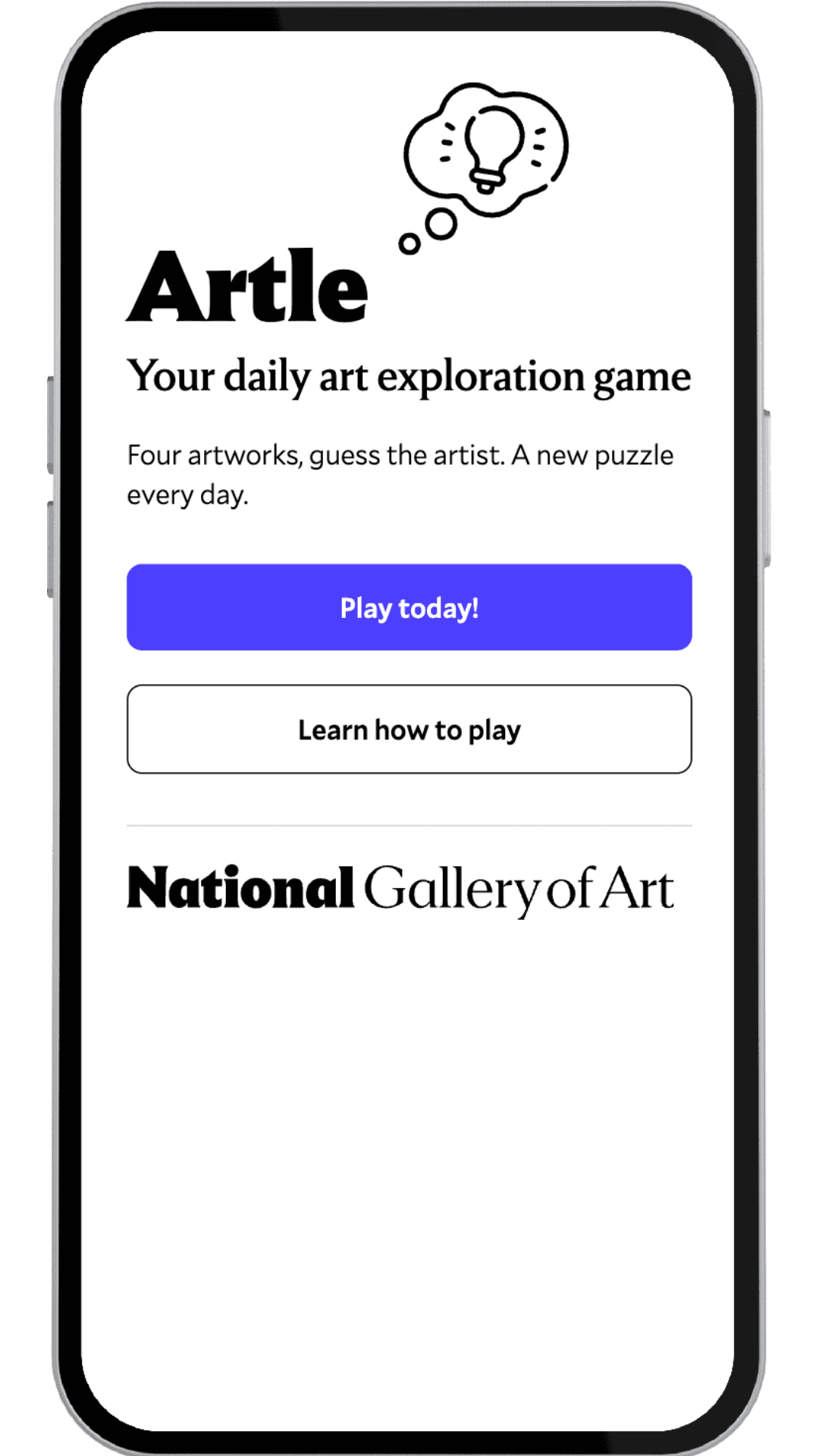
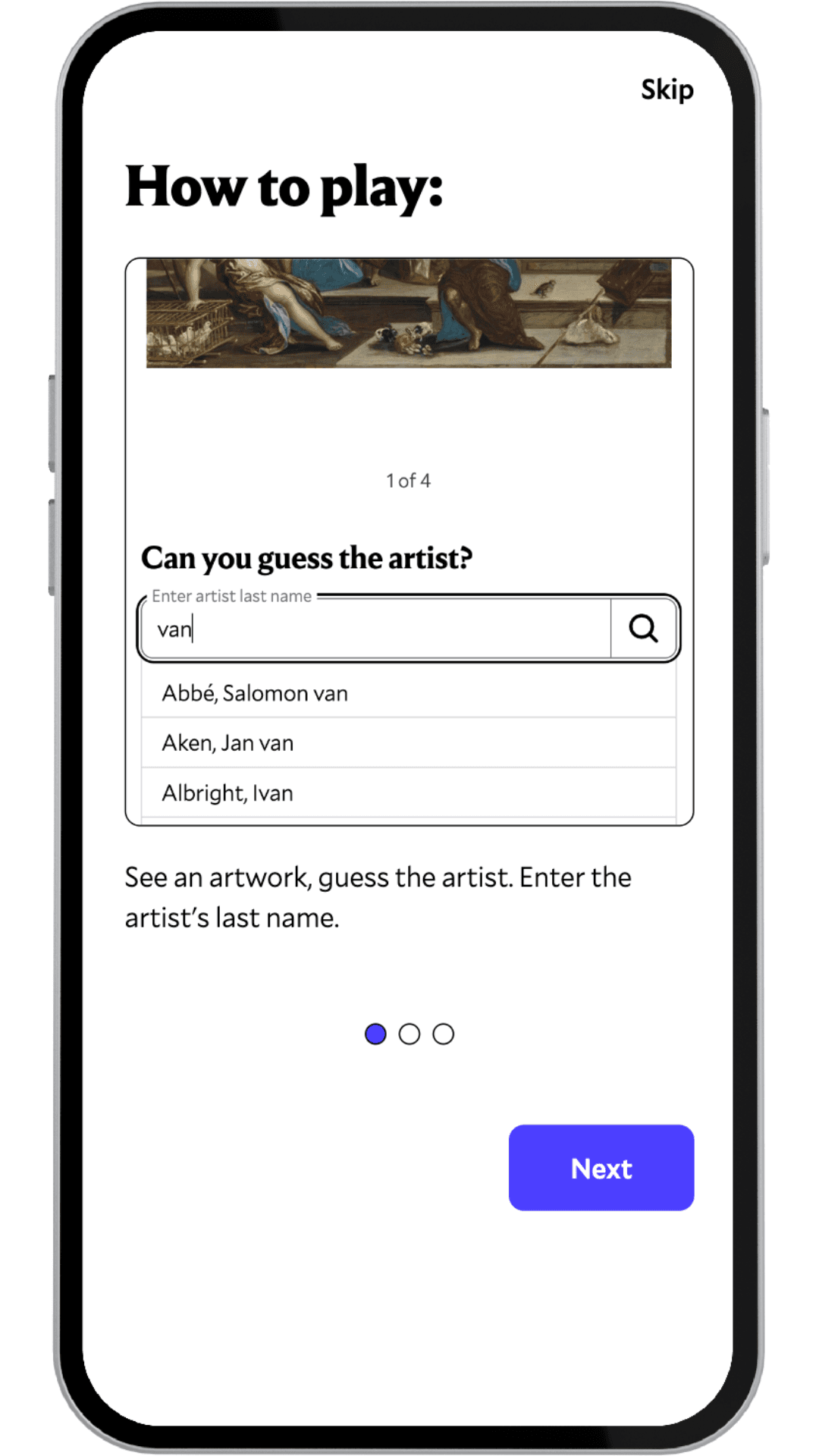
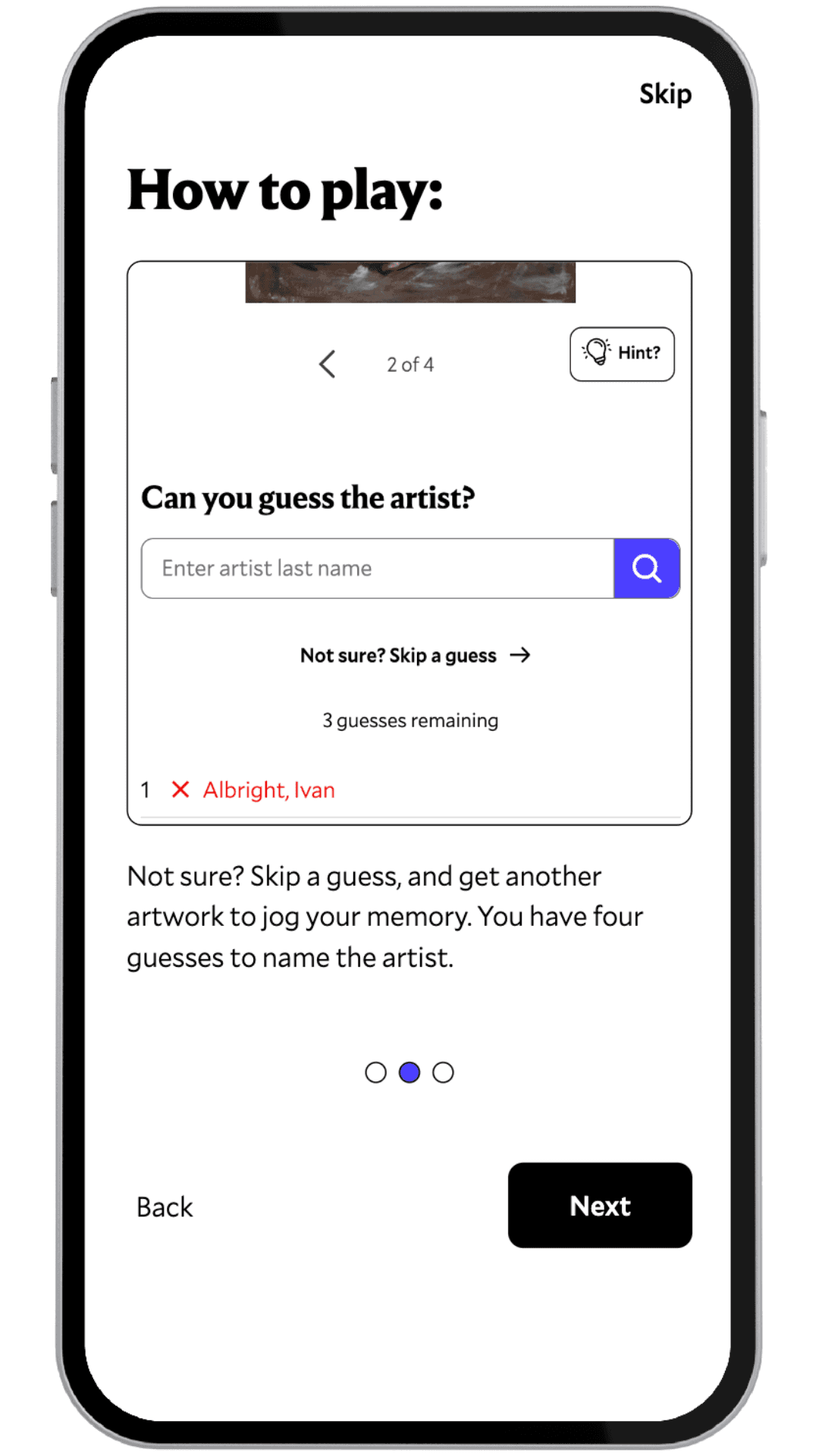
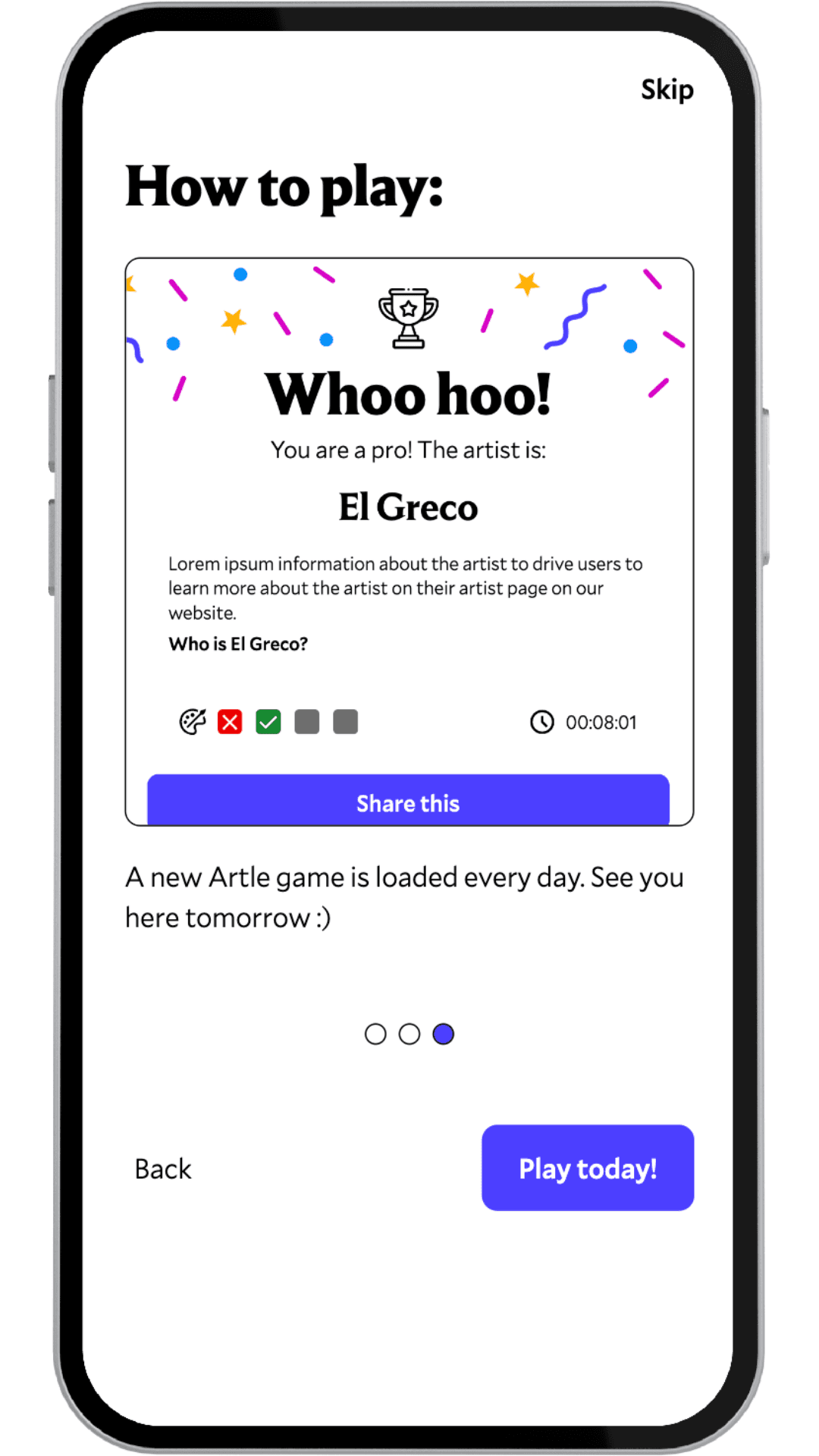
Participant feedback and behavior were synthesized into targeted recommendations, each paired with mockups to triangulate findings.
Before

After
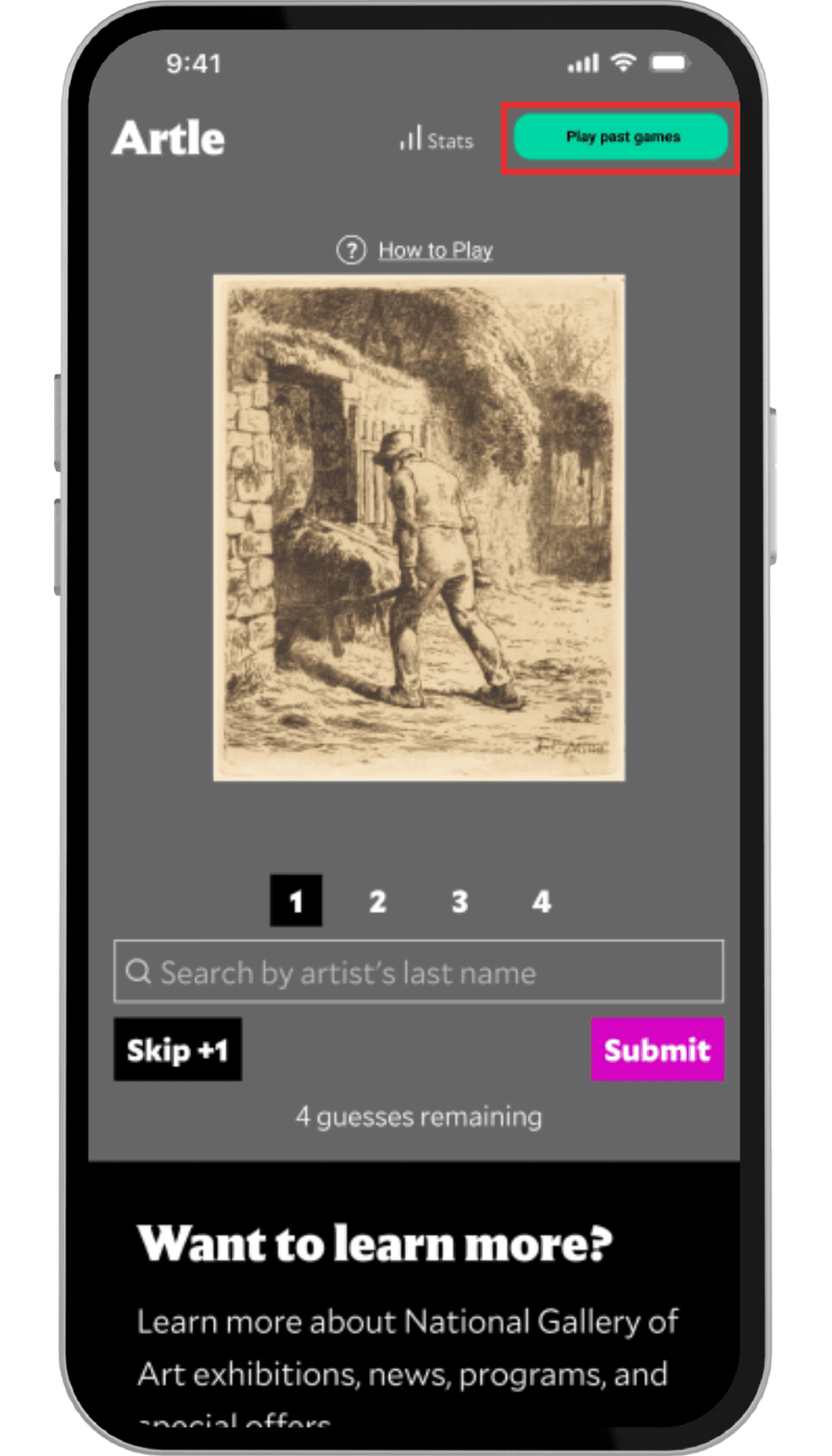
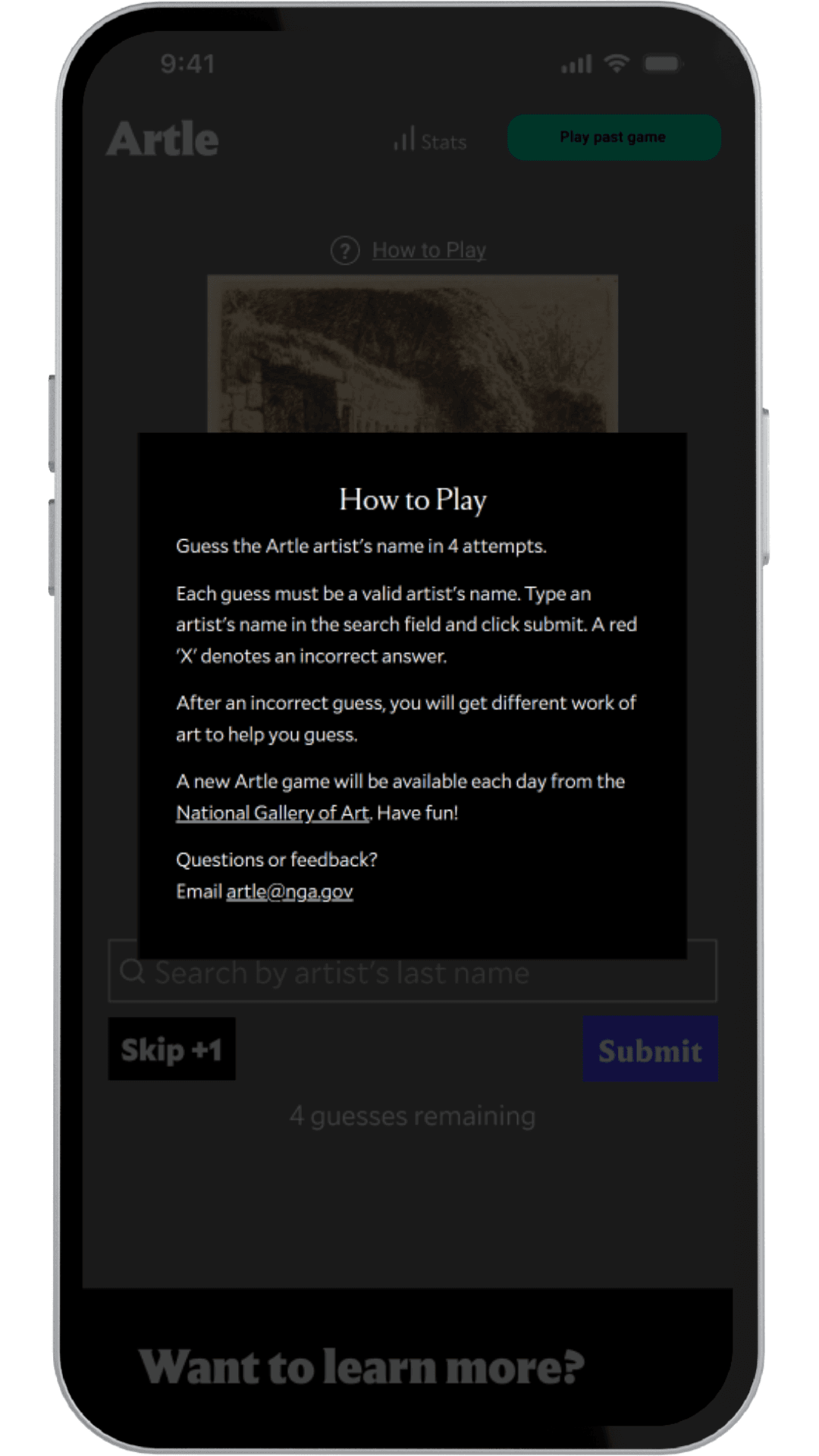
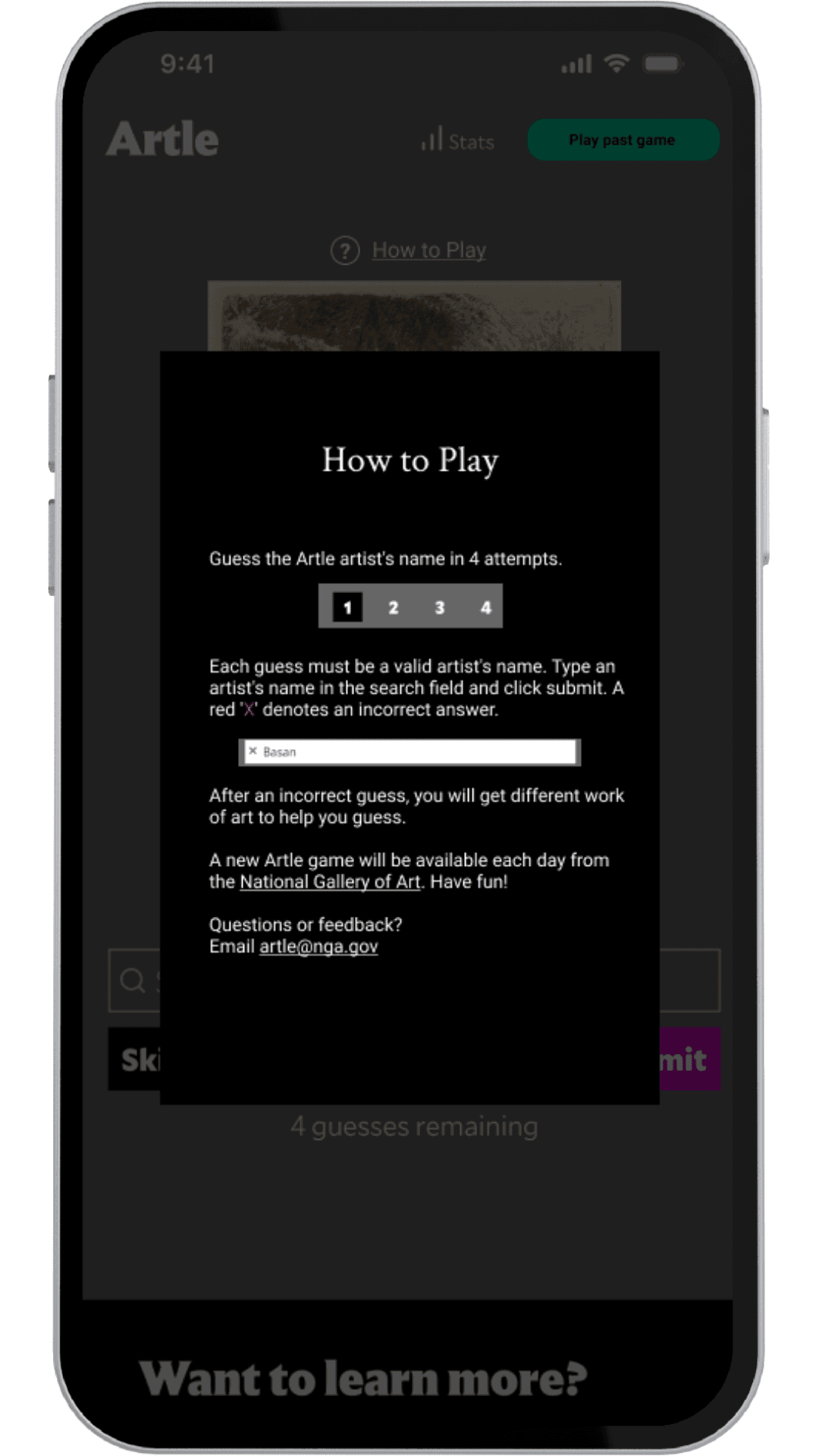
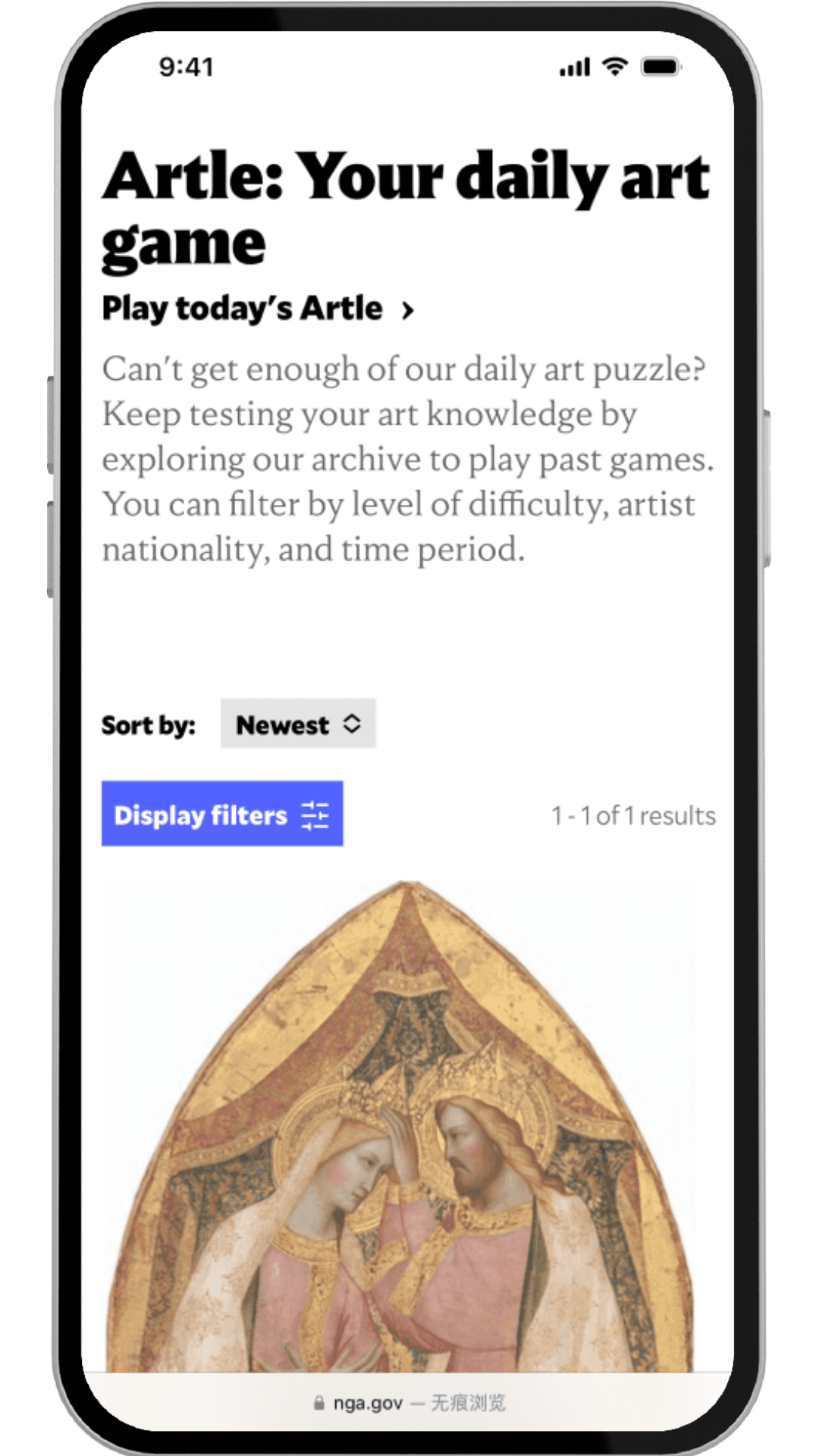
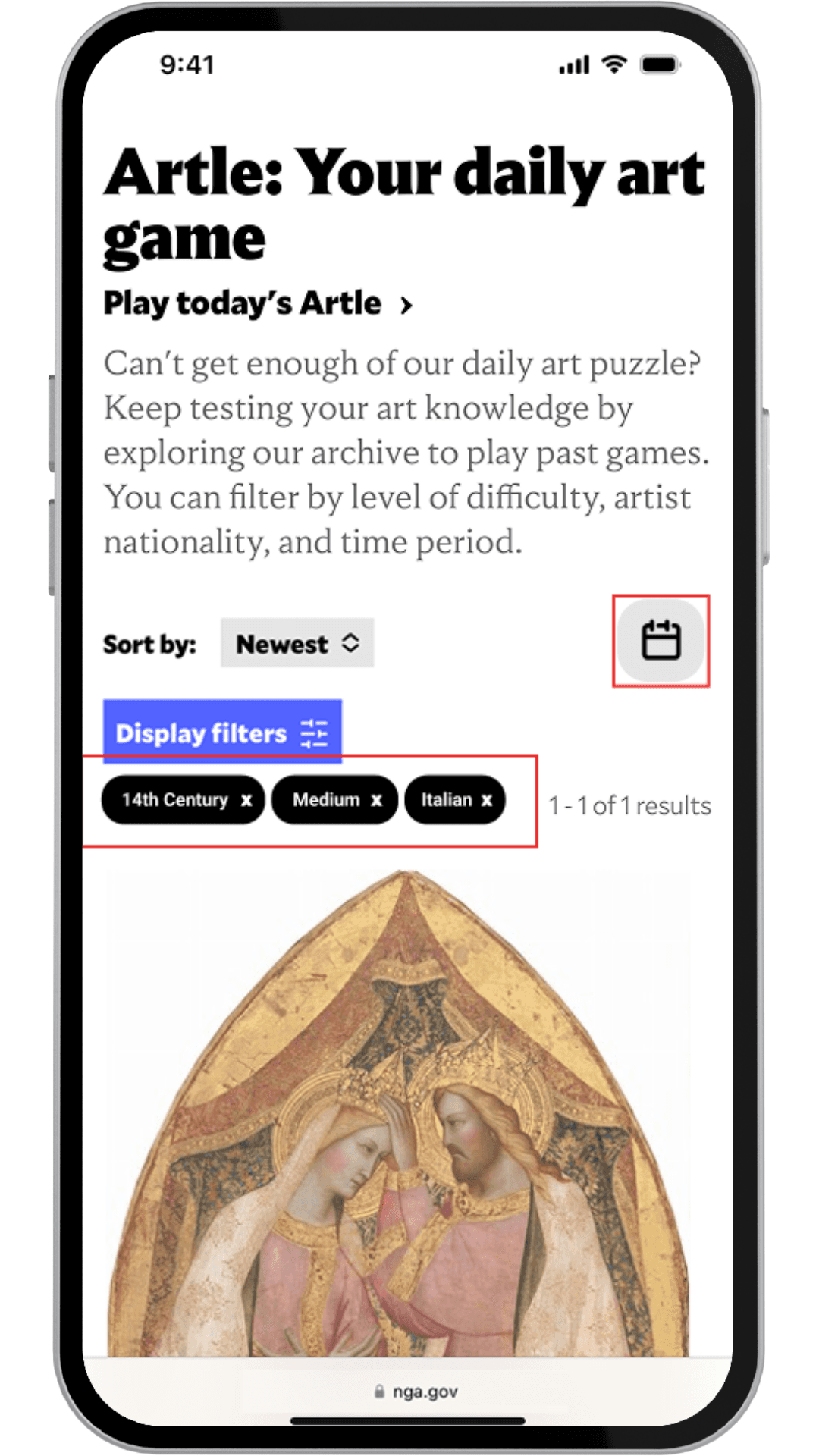

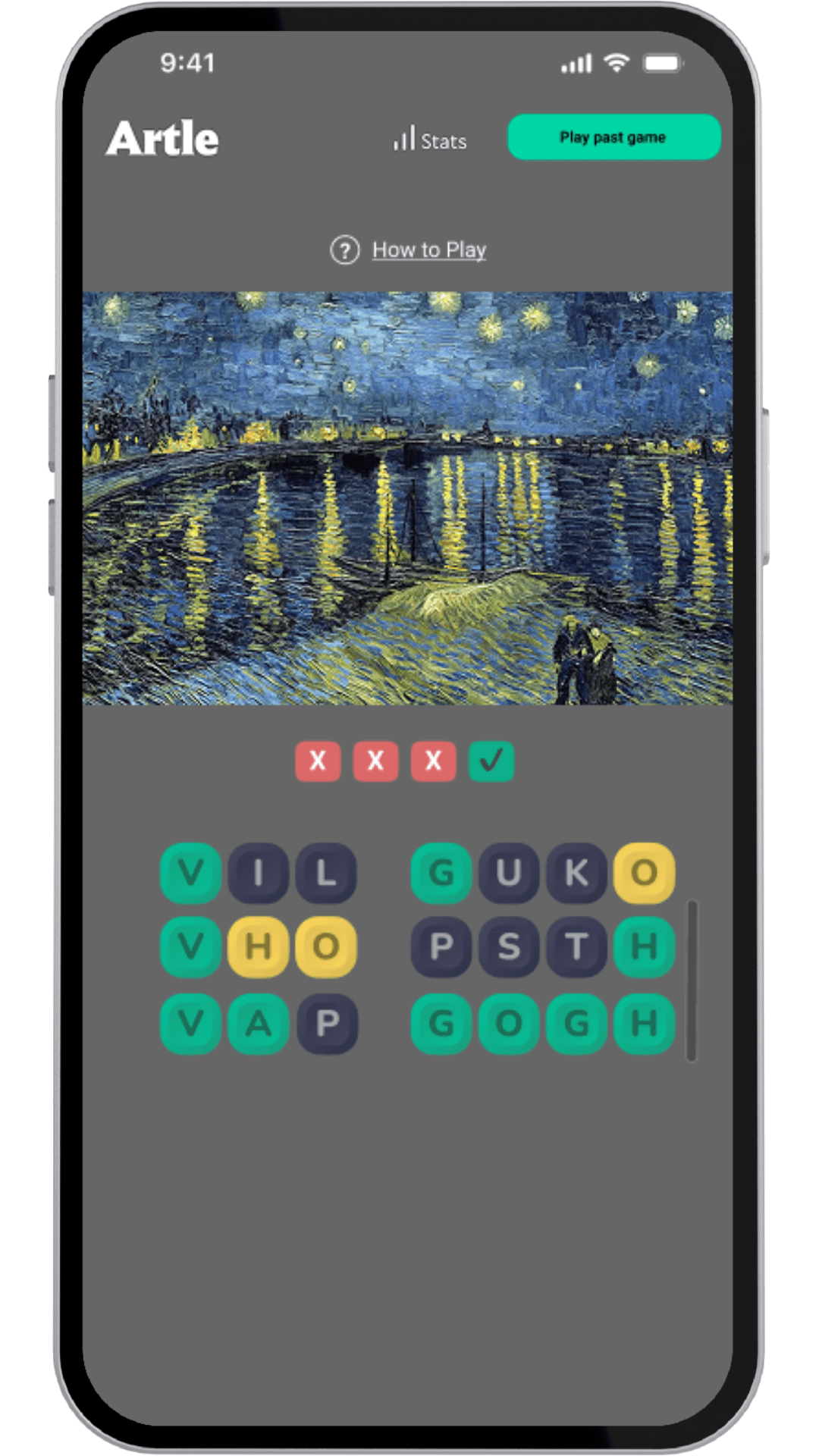
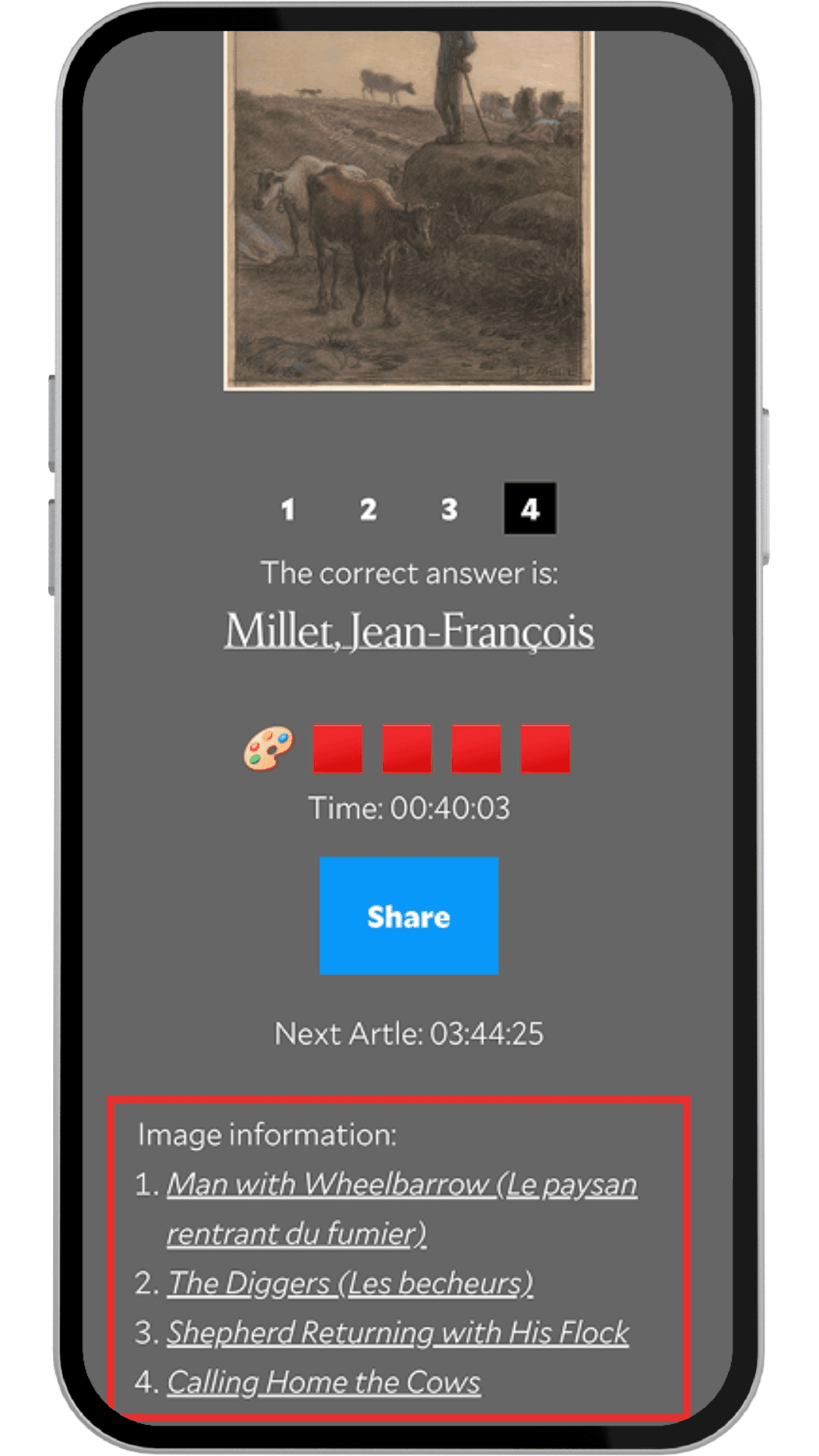
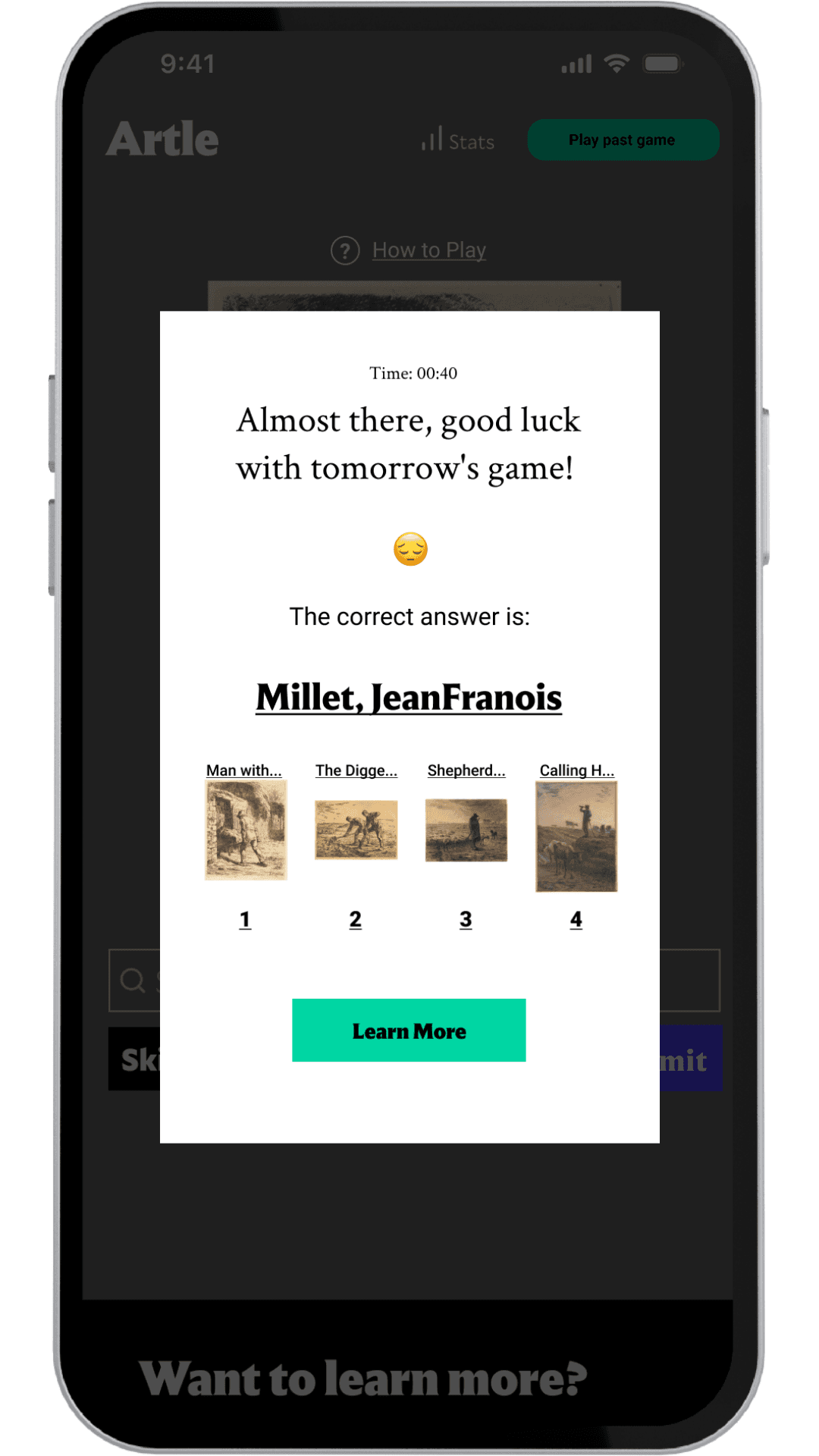

My findings ultimately aligned with the client’s earlier internal tests, further supporting their product direction and reinforcing confidence across the team. The client expressed that our insights “triangulated with previous tests,” giving them a stronger evidence base to move forward decisively.
Our research directly informed the development of the new Artle, contributing to its refreshed, modern, and more intuitive design. Many of the suggestions we offered—both formally in our recommendations and informally through ongoing conversations—were incorporated into the updated experience. These included: